



Rewards Strategy for a New Era: From Standard Formulas to Building Distinctive Value
Nov 9, 2026
Last updated on Nov 10, 2026
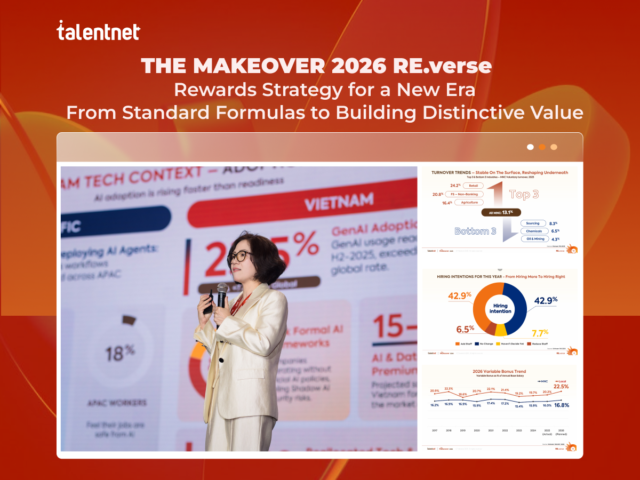
As economic uncertainty intensifies, AI reshapes the future of work, and employee expectations become increasingly diverse, can traditional compensation and benefits models still give businesses a competitive edge? At The Makeover 2026, Ms. Nguyen Thi Quynh Phuong – Director of Human Capital Solutions, Talentnet – shared her insights on the evolving landscape of employee rewards […]

Thank you for your interest in our services.
Kindly check your mailbox to get the document.
As economic uncertainty intensifies, AI reshapes the future of work, and employee expectations become increasingly diverse, can traditional compensation and benefits models still give businesses a competitive edge?
At The Makeover 2026, Ms. Nguyen Thi Quynh Phuong – Director of Human Capital Solutions, Talentnet – shared her insights on the evolving landscape of employee rewards through her presentation, “Rewards Strategy for a New Era: From Standard Formulas to Building Distinctive Value.”
Presentation drew on data from the Talentnet-Marsh Total Remuneration Survey (TRS), covering compensation, rewards, and benefits data from nearly 750 companies across diverse industries. Complementing these market insights, the Employee Snapshot survey of 1,486 employees across 19 industries provided further perspectives on workforce expectations and employee experiences.
Drawing on market data and employee lifecycle insights, her presentation highlighted a critical shift in how organizations should approach Total Rewards: moving beyond standardized compensation and benefits practices towards differentiated strategies that create meaningful value for both employees and businesses.
1. RE.VEAL: Understanding the Forces Reshaping the Workforce Landscape
A competitive rewards strategy must begin with a clear understanding of the broader economic and workforce landscape. In 2026, businesses are navigating two major forces: rising operating costs and accelerating technological transformation.
Rising productivity amid mounting economic pressures
Vietnam’s labor productivity is estimated to reach USD 28,956 per worker in 2026, representing a 24.4% increase compared to 2022. This growth significantly outpaces APAC (+14.2%) and the global average (+7.5%).
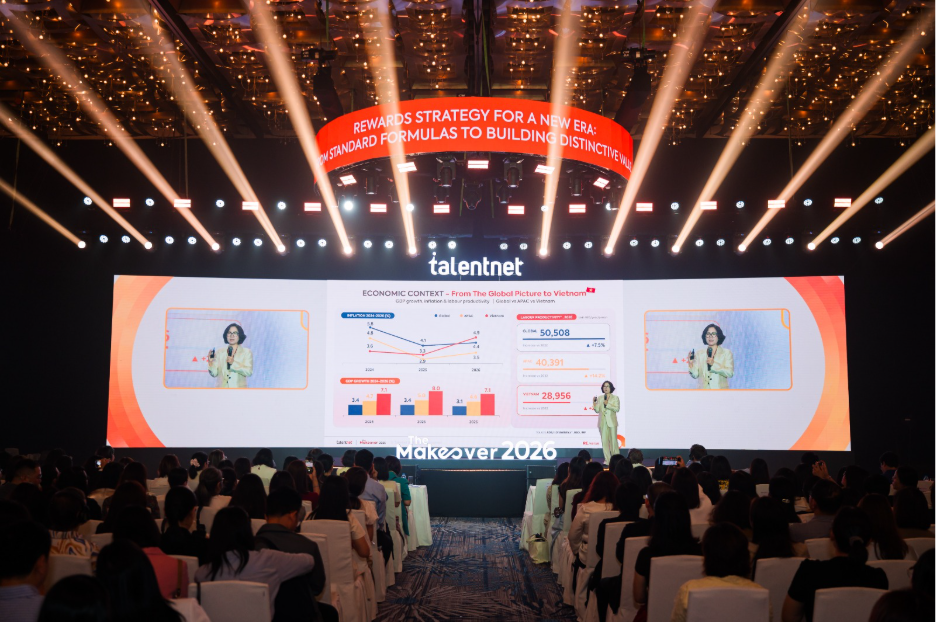
However, productivity gains come alongside mounting cost pressures. Rising oil and gold prices, interest rates, and domestic inflation are putting pressure on operating expenses and profit margins. Businesses must therefore strike a careful balance between compensation spending and sustainable business performance.
AI is reshaping talent demand and creating new pay premiums
The rapid adoption of Generative AI is transforming workforce structures and talent requirements. Across APAC, 53% of business leaders have deployed AI Agents in their operations, while 78% of knowledge workers use AI weekly.
In Vietnam, GenAI adoption reached 23.5% in the second half of 2025, exceeding the global average of 16.3%. More than 2,500 positions in the Technology and Banking sectors have also seen budget reallocations towards Data and AI infrastructure.
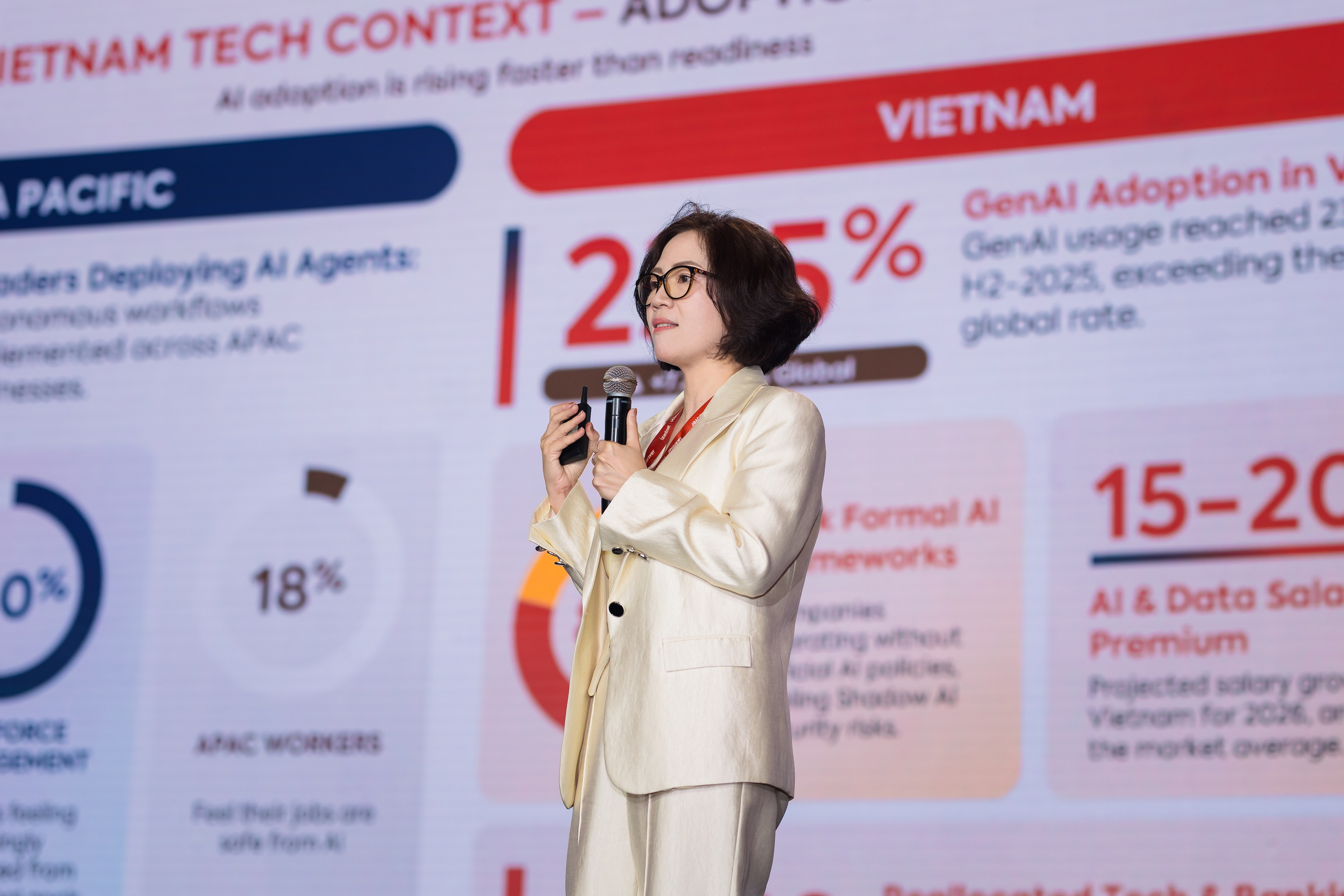
This transformation is creating significant compensation gaps for emerging skills. In 2026, salaries for AI and Data roles are projected to increase by 15–20%, approximately twice the overall market average
2. RE.ACT: How Are Businesses Responding to the Changing Landscape?
Building on these macroeconomic and technological shifts, the presentation examined how organizations are adapting across four key stages of the employee lifecycle: Attract, Retain, Rewards, and Development.
Attract – Moving from Hiring More to Hiring Right
Market data shows that 43% of organizations plan to increase their workforce, while another 43% intend to maintain current headcount. Meanwhile, 6.5% anticipate workforce reductions.
This reflects a more cautious approach to workforce planning. Rather than pursuing headcount expansion indiscriminately, businesses are increasingly focused on identifying critical roles, addressing capability gaps, and ensuring that every hiring decision supports organizational priorities.
Retain – A More Stable Labor Market Does Not Mean Retention Challenges Have Disappeared
Voluntary turnover rates indicate that local companies have generally experienced higher employee turnover than multinational corporations (MNCs) throughout most of the observed period.
In the first half of 2026, voluntary turnover stood at 9.8% for local companies and 6.6% for MNCs.
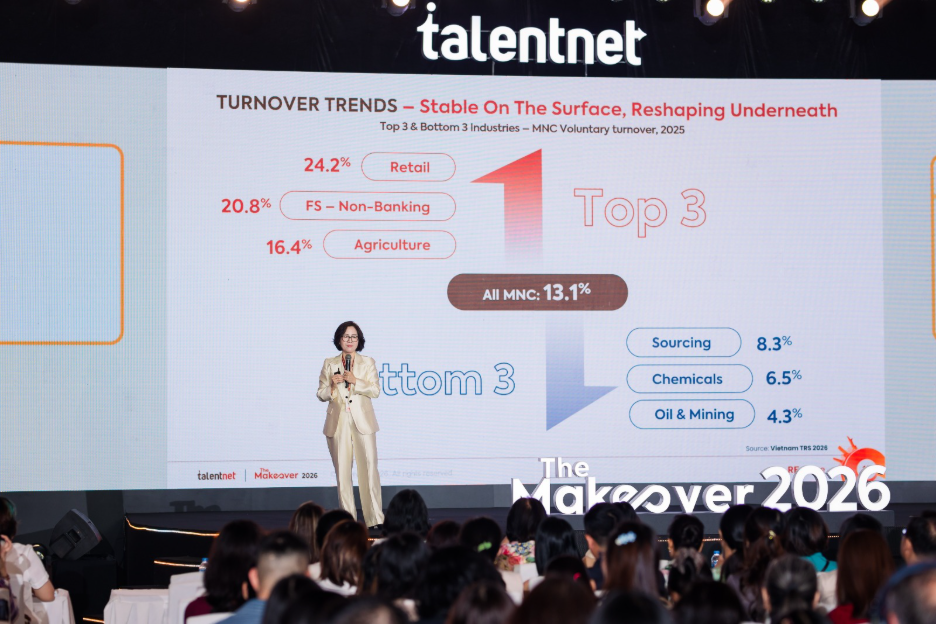
Although the labor market appears more stable, employees are becoming more selective about where they choose to stay. Retention is therefore no longer simply about offering competitive salaries; it is about creating meaningful reasons for employees to remain committed to an organization.
Rewards – Balancing Compensation Investment with Business Value
In 2026, average salary increases are estimated at 6.0% for MNCs and 5.7% for local companies. Both groups project an increase to 6.2% in 2027.
Variable bonus trends reveal a different pattern. Local companies recorded an actual bonus payout of 20.2% of annual base salary in 2025, compared with 16.0% for MNCs. Their respective 2026 targets are 22.5% and 16.8%.
These figures highlight the importance of designing compensation structures that reflect industry characteristics, financial capacity, and performance objectives, rather than focusing solely on increasing pay levels.
Development – Investing in Future-Ready Capabilities
Employee development remains another important area of workforce investment.
According to the survey, 72.2% of companies allocate training budgets to technical and job-related development, while 60.4% invest in management training.
The average annual training budget ranges from VND 5 million to VND 16 million per employee.
As job requirements continue to evolve, capability development is essential not only for improving current performance but also for preparing the workforce for future business challenges.
3. RE.DEFINE: What Do Employees Really Value in Their Rewards Packages?
One of the key insights from the presentation is that the value of a rewards package extends beyond what an organization pays. It also depends on how employees understand, perceive, and experience those benefits.
Based on the Employee Snapshot survey of 1,486 employees across 19 industries, several important shifts in employee expectations have emerged.
Transparency: The foundation of a meaningful rewards experience
Employees identified three areas of their current rewards packages that lack clarity:
- 38%: Salary review and evaluation processes.
- 18%: Bonus and compensation calculation methods.
- 18%: Details of health insurance coverage.
This highlights the importance of transparency in helping employees understand their entitlements, perceive fairness, and recognize the value of their organization’s investment.
Different generations, different definitions of value
Employee expectations also vary significantly across generations:
- Gen X (1965–1980): Prioritizes hybrid working, spot recognition rewards, and health and wellness benefits. Notably, 38% believe seniority-based pay is no longer relevant.
- Gen Y (1981–1996): Values learning and career development, spot recognition rewards, and hybrid working.
- Gen Z (1997–2004): Places greater emphasis on learning and career development, spot recognition rewards, and health and wellness benefits.
These differences reinforce the need for organizations to understand the motivations and priorities of different employee groups rather than assuming that one rewards package will appeal equally to everyone.
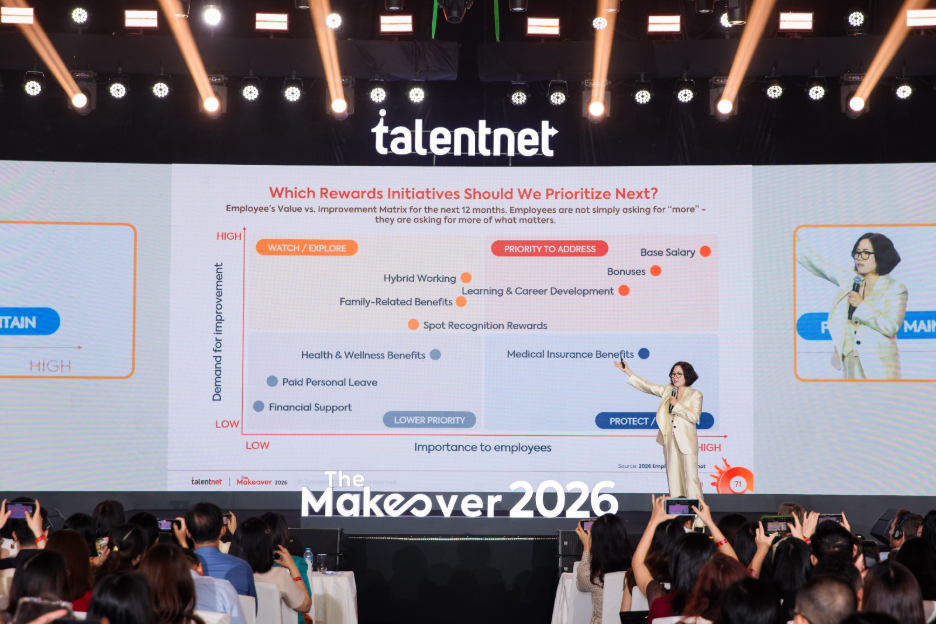
Moving beyond One-size-fits-all towards differentiated rewards
The survey further reveals that 37% of employees advocate eliminating standardized, one-size-fits-all benefits policies.
At the same time, the criteria for determining future salary increases and rewards are shifting away from seniority towards three more value-driven factors:
- Outstanding Productivity.
- Critical Roles.
- Future-Critical Skills.
This signals an important transition: organizations need more flexible rewards frameworks that recognize individual contributions, strategic roles, and capabilities that drive future business value.
4. REMEMBER – PEOPLE FIRST: Meaningful Rewards Begin with Understanding People
Concluding her presentation, Ms. Quynh Phuong brought together the key insights through three interconnected principles:
- RE.VEAL: Recognize how the market is changing, from economic conditions and technology to the entire employee lifecycle.
- RE.ACT: Understand how businesses are responding to new pressures arising from global crises, business transformation, technology, productivity, and innovation.
- RE.DEFINE: Challenge conventional rewards practices and rethink what employees truly value.
Yet beyond all these market shifts, technological developments, and changes in compensation policies, one principle must remain at the center:
REMEMBER – PEOPLE FIRST.
People First in the digital era does not necessarily mean paying more. It means understanding employees better.
An effective rewards strategy is not necessarily the one with the largest budget, but the one that translates organizational investment into meaningful value for different employee groups while reflecting the organization’s distinctive identity and business direction.
Ultimately, this is the shift from offering standardized compensation and benefits to building distinctive rewards experiences – where employee expectations and organizational ambitions come together to support sustainable growth.

Solve your HR problems!
6th Floor, Star Building, 33 Mac Dinh Chi, Saigon Ward, Ho Chi Minh city, Vietnam