



Cost Pressures and AI Are Shaping Corporate Rewards Strategies in Vietnam

Oct 28, 2026
Last updated on Oct 28, 2026
Facing rising costs, shifting talent demand, and diverse employee expectations, Vietnamese businesses are rethinking workforce investment. Talentnet’s three strategic actions — RE.VEAL, RE.ACT, and RE.DEFINE — offer a framework for navigating these challenges, allocate rewards investment more effectively, and realign rewards and benefits with business priorities and employee expectations. Speaking at The Makeover 2026 in […]
Facing rising costs, shifting talent demand, and diverse employee expectations, Vietnamese businesses are rethinking workforce investment. Talentnet’s three strategic actions — RE.VEAL, RE.ACT, and RE.DEFINE — offer a framework for navigating these challenges, allocate rewards investment more effectively, and realign rewards and benefits with business priorities and employee expectations.
Speaking at The Makeover 2026 in Ho Chi Minh City on October 15, Ms. Nguyen Thi Quynh Phuong, Head of Human Capital Solutions at Talentnet, presented findings from the Talentnet-Mercer (Marsh) 2026 Total Remuneration Survey in her session, “Rewards Strategy for a New Era: From Standard Formulas to Building Distinctive Value.” Together with Talentnet’s 2026 Employee Snapshot, a poll of nearly 1,500 employees across 19 industries, the data suggests that employee expectations of rewards are becoming more varied, and that one standard package no longer fits everyone
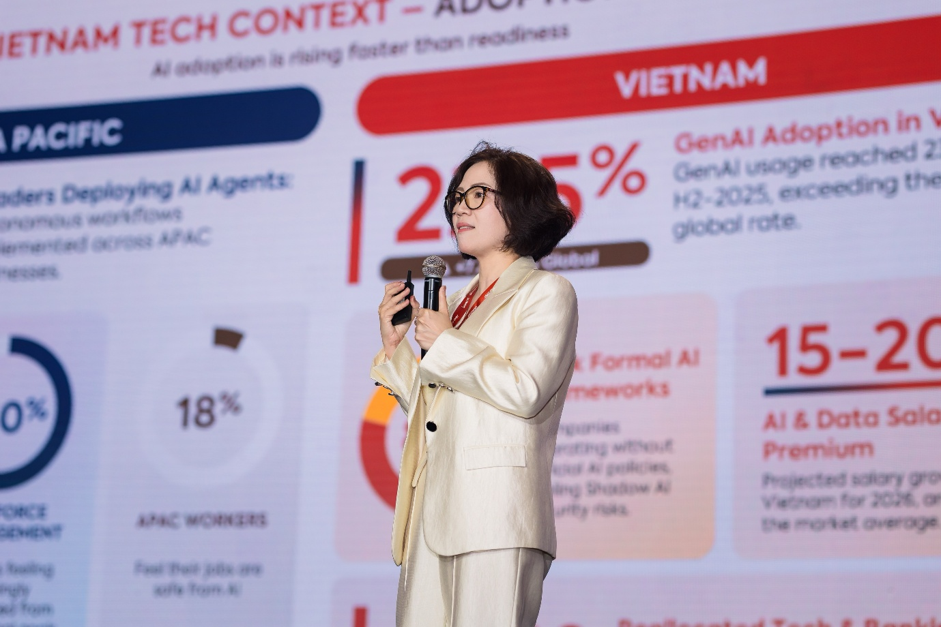
Ms. Nguyen Thi Quynh Phuong discusses evolving rewards strategies at The Makeover 2026.
RE.VEAL: Rising productivity, AI and More Targeted Talent Investment
Figures presented at The Makeover 2026 put productivity at an estimated US$28,956 per worker in 2026, up 24.4% from 2022 and outpacing Asia-Pacific’s 14.2% growth over the same period.
AI is also reshaping talent needs and pay priorities. Technology is adding another layer of pressure. AI adoption is accelerating across Asia-Pacific and Vietnam, reshaping jobs and increasing demand for data, digital and AI capabilities. As businesses move toward broader AI deployment, they must build future-ready skills while managing the rising cost of scarce technology talent.
Vietnam’s labor market is showing signs of stabilization, with voluntary turnover easing in the first half of 2026, even as the labor market stabilizes, targeted investment in talent remains essential. The Talentnet-Mercer (Marsh) 2026 survey shows that 43% of organizations plan to increase headcount and another 43% plan to hold it steady, signaling a cautious hiring outlook. Compensation is equally selective: merit increases for 2026 are projected at around 6% for both multinational and local companies, while variable bonuses remain a key tool for tying rewards to individual contribution and company performance.
Development remains a priority, with more than 70% of surveyed organizations providing training support for technical and job-related skills. Overall, employers are moving toward more targeted human capital investment, where recruitment, rewards, and development decisions must increasingly prove their impact on organizational performance.
RE.ACT: Mounting cost pressures call for targeted action
Behind these shifts lie mounting cost pressures. Figures presented at the event point to 2026 as the first year in which energy and gold prices, US Federal Reserve rates, domestic borrowing costs, and inflation are all trending upward at the same time, making it harder for businesses to balance workforce spending against revenue growth and profitability.
For employers, this creates a twofold challenge: keeping costs under control while attracting and retaining critical talent, particularly as AI and technology reshape talent needs. Rather than applying uniform raises, businesses should adopt a more tailored rewards strategy, prioritizing the roles and skills that are most critical to strategic priorities and will create the greatest business value.
During the RE.ACT session, Talentnet also presented four workforce models that highlight how industries are responding differently to macroeconomic shifts, rising cost pressures, and technological advancements: Sustainable Growth, Investment, Streamline, and Resilience. These models illustrate the diverse ways businesses are adapting their workforce and rewards strategies to balance business growth, talent investment, cost efficiency, and organizational resilience in an increasingly uncertain environment.
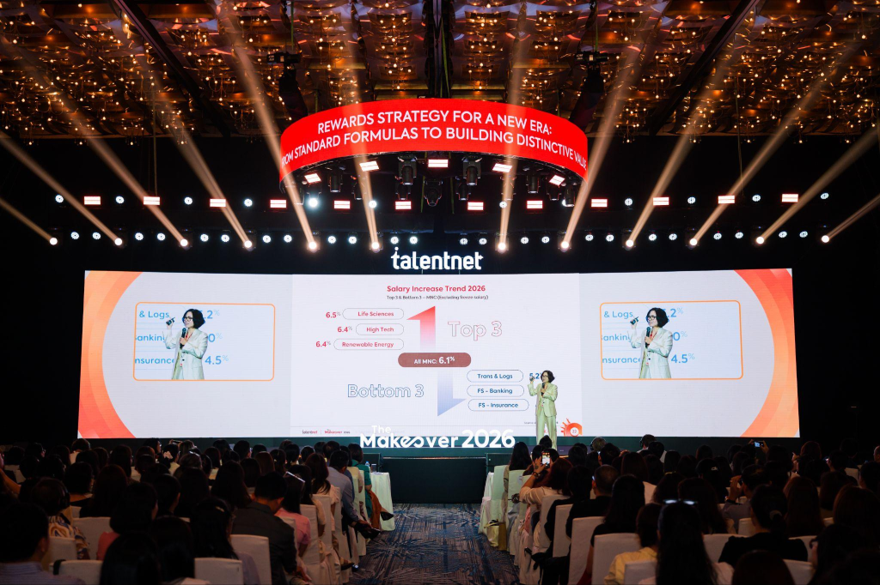
Talentnet-Mercer (Marsh) 2026 findings reveal emerging salary trends across Vietnam’s industries.
RE.DEFINE: Moving beyond one-size-fits-all rewards
While market conditions shape resource allocation, changing employee expectations are pushing organizations to rethink reward design. Talentnet’s 2026 Employee Snapshot shows that salary, bonuses and medical insurance remain the top priorities across all generations. Beyond these, preferences differ: Gen X leans toward flexibility and recognition, Gen Y toward career development and recognition, and Gen Z toward learning, recognition, and wellbeing. Standardized packages therefore risk delivering uneven value across groups.
Tailoring rewards, however, is not only about individual preferences. It also means linking pay to the value employees create, such as their contribution, role and skills, alongside tenure, rather than relying on a single standard formula. Doing so helps businesses allocate resources more strategically and better attract, retain, and develop key talent.
An effective Total Rewards Strategy must balance market competitiveness, employee expectations, and long-term business priorities, echoing Talentnet’s closing message, “REMEMBER – PEOPLE First.” Putting people first is not simply about how much organizations spend, but how effectively they align rewards with what employees value and what the business needs. By designing rewards around both employee expectations and business priorities, organizations can make more effective use of their rewards investment while supporting employee engagement and long-term business performance.

Solve your HR problems!
6th Floor, Star Building, 33 Mac Dinh Chi, Saigon Ward, Ho Chi Minh city, Vietnam