



How HR Analytics Helps Organizations Bridge Culture and Engagement Gaps
Jun 25, 2026
Last updated on Jun 25, 2026
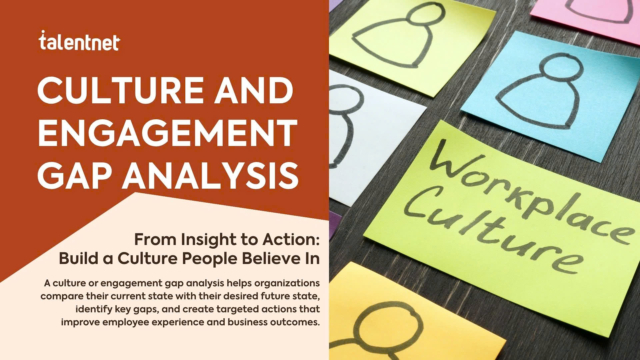
Many organizations invest heavily in defining company values, leadership principles, and employee experience initiatives. Yet one challenge continues to appear across organizations of all sizes: the culture leaders intend to build is not always the culture employees actually experience. When these gaps remain unidentified, they can gradually affect employee engagement, collaboration, retention, and overall business performance.
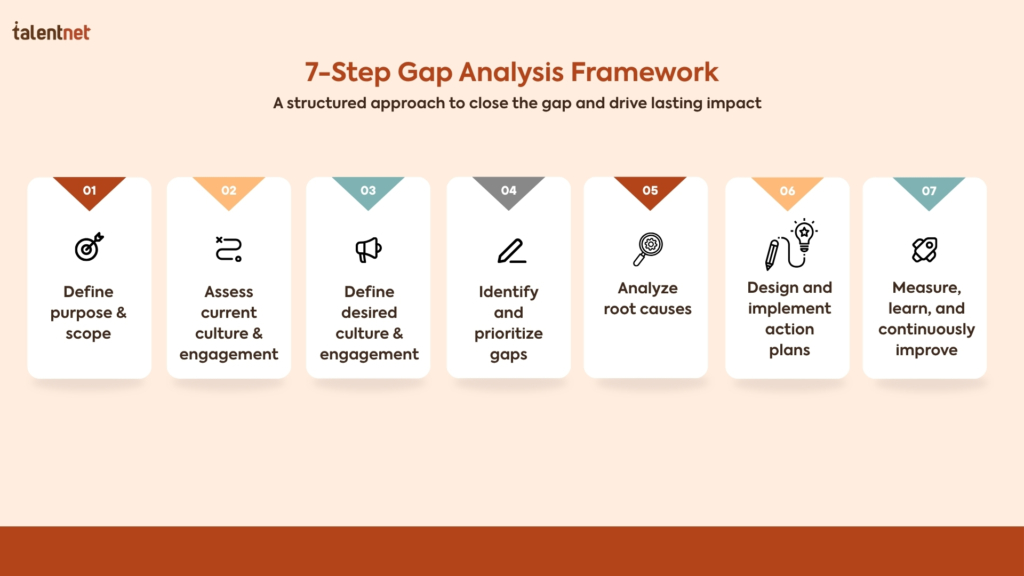
This is where Culture or Engagement Gap Analysis becomes increasingly important. Rather than relying on assumptions, organizations can use a structured approach to compare their current state (As-Is) with their desired future state (To-Be). The purpose is not simply to diagnose problems, but to understand what creates the gap and what actions are needed to close it.
Modern organizations increasingly combine this approach with HR Analytics, people analytics, and workforce analytics to move beyond intuition and create more evidence-based decision-making. By integrating employee feedback and organizational data, leaders can gain a clearer understanding of workplace realities.

Thank you for your interest in our services.
Kindly check your mailbox to get the document.
How HR Analytics Strengthens Culture Gap Analysis
A culture or engagement gap analysis typically begins with collecting both quantitative and qualitative insights. Organizations gather information through employee surveys, eNPS results, focus groups, interviews, one-on-one discussions, and existing workforce data.
This process also benefits from broader HR data analysis, where organizations review important people metrics such as turnover rates, retention trends, absenteeism, and internal mobility. When these data points are consolidated into an HR dashboard, leaders can more easily identify patterns, uncover hidden issues, and prioritize actions based on business impact.
The value of this analysis extends far beyond identifying symptoms. It helps organizations understand root causes behind disengagement, collaboration challenges, or cultural misalignment. Leadership behaviors, communication practices, organizational systems, and workplace policies can all influence employee experience.
As organizations become more mature in their analytics capabilities, some also apply predictive HR analytics to anticipate potential engagement risks and workforce trends before they become larger challenges. This creates opportunities to shift toward a more data-driven HR approach where decisions are supported by both employee insights and measurable evidence.
Ultimately, the goal is not simply to collect more data. The goal is to transform insights into practical actions that strengthen culture and improve employee experience.
How Talentnet Helps Organizations Close Culture Gaps
A gap analysis only creates value when it leads to change, and this is often where organizations stall. Identifying the distance between the culture leaders intend and the one employees actually experience is the easier part. Redesigning the systems, behaviors, and structures that created that distance is harder, and it rarely happens through internal effort alone.
This is where Talentnet works alongside leadership teams. The starting point is culture diagnostics: turning survey results, eNPS scores, and workforce metrics into a clear view of root causes rather than symptoms. From there the focus shifts to action. Organization design realigns roles, reporting lines, and decision rights so the structure reinforces the intended culture instead of working against it. Leadership development equips managers to model the behaviors that shape daily experience. Change management keeps the transition on track, while workforce transformation initiatives tie the new ways of working back to business strategy.
The result is a measurable link between insight and outcome. Instead of another report that confirms a problem, leaders get a prioritized roadmap that closes the gap and can be tracked over time.
Conclusion
Culture cannot be improved through assumptions alone. Organizations that continuously assess, measure, and act on employee experiences are better positioned to build workplaces where people feel engaged, supported, and motivated to contribute. By turning insights into action, organizations can create cultures that not only strengthen employee experience but also support long-term business growth.
Thank you for your interest in our services.
Kindly check your mailbox to get the document.
Sources: HR Exchange Network, “Human Resources: Bridging the Culture Gap” (2024); Globe One, “Cultural Potential Gap Analysis”; AIHR, “HR Gap Analysis Template”; HRBrain, “Gaps Between Desired Culture and Actual Culture Analysis”; Talentnet HCS Internal Framework.
HR reports
Download presentations, useful documents and more in our library
Get them nowRelated insights



Solve your HR problems!
6th Floor, Star Building, 33 Mac Dinh Chi, Saigon Ward, Ho Chi Minh city, Vietnam