



Work – Worker – Workplace: Talent Retention, Reinvented for Turbulent Times

Dec 16, 2025
Last updated on Dec 17, 2025
As artificial intelligence accelerates at breakneck speed, the global workforce structure is shifting faster than most companies can adapt. This raises a strategic question: In the age of AI, how should businesses manage human capital to stay both effective and sustainable?
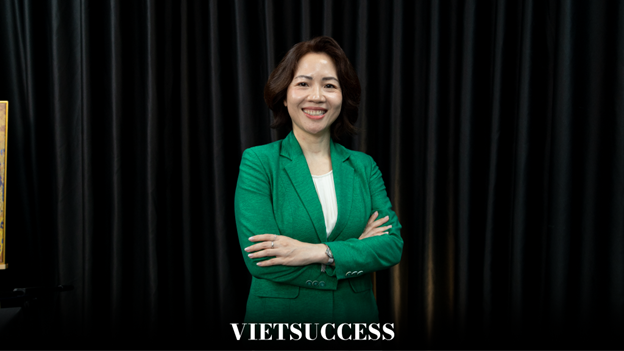
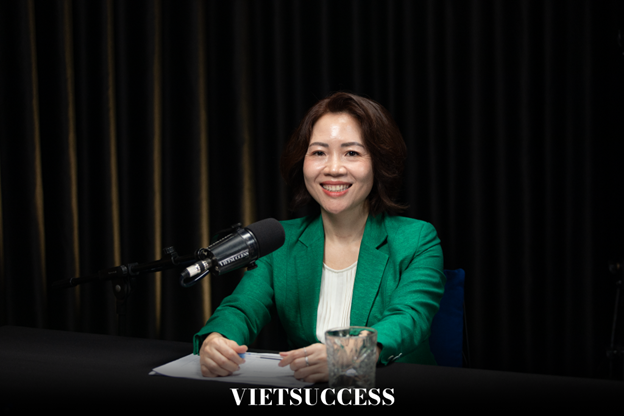
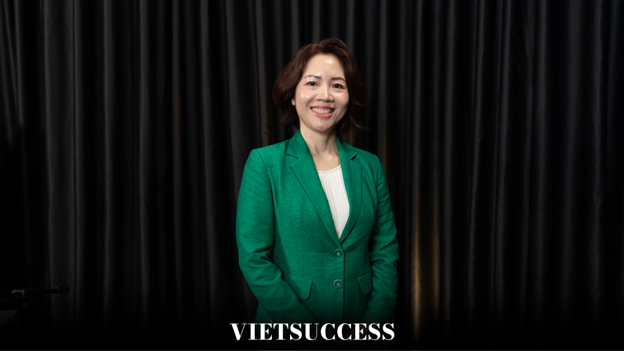
Beyond operational optimization, today’s HR challenge demands a refined blend of job design, human capability, and workplace environment. Insights from Ms. Nguyễn Thị Quỳnh Phương, Head of Human Capital Solutions at Talentnet, show how the 3W Model (Work – Worker – Workplace) and modern people-management principles are becoming essential foundations for Vietnamese businesses stepping into the AI era with clarity and strategy.
Ms. Nguyễn Thị Quỳnh Phương is widely recognized as a leading HR expert with deep organizational-design experience. For years, she has helped both Vietnamese companies and multinational organizations build job architectures, capability frameworks, and HR operating models during digital transformation.
When AI shifts from pressure to power
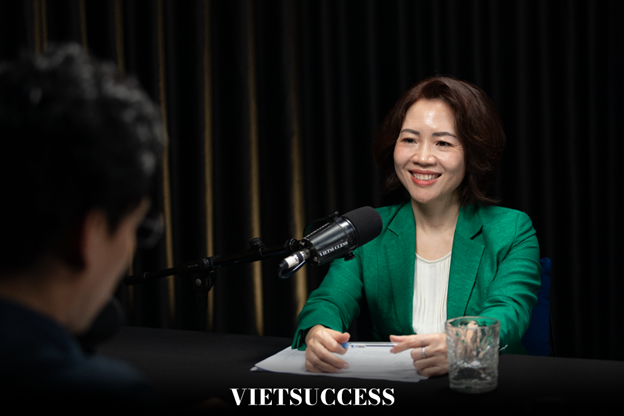
The rise of AI is forcing leaders into rapid decisions. But speed, without direction, often results in misguided implementation. The first shift, according to Ms. Quỳnh Phương, is mindset: AI must be viewed as a resource, not simply a tool. When AI is placed on the same strategic footing as human talent, companies can design their organizations proactively instead of reacting to market pressure.
To unlock AI’s real value, strategy must lead the way. Businesses need to answer:
-
- How will our business model evolve in the next 3–5 years?
- Which core capabilities should be retained, upgraded, or replaced by technology?
- Does AI support strategic goals, or is it only boosting short-term productivity?
Vietnam’s reality reveals a paradox: 91% of employees say they use AI, yet only 14% of companies use it effectively, largely due to reactive adoption focused on tools instead of objectives. The cherished “fast execution culture” of Vietnamese businesses can, at times, hinder long-term thinking. Without strategy, AI becomes cosmetic — useful for reports, but not transformational.
Meanwhile, companies that anchor AI to strategy understand: AI excels at operations; humans excel at judgment. That clear division of roles is what creates long-term organizational resilience.
Talent Retention, Reinvented for Turbulent Times
If strategy and technology answer where a company is headed, the 3W model answers how it gets there.
1. Worker – Work – Workplace: A Three-Pillar HR Ecosystem
In the 3W model, the pillars form an interconnected triangle:
-
- Worker: The people turning strategy into real outcomes.
- Work: The tasks, roles, and value employees deliver.
- Workplace: The culture, environment, and operating mechanisms enabling people to perform.
The principle is simple: people thrive only when they are matched with the right work, within a workplace that supports and energizes them.
A great job in a poor environment pushes employees out; a great environment without clarity in work reduces performance. Together, the 3Ws form an integrated ecosystem — weaken one pillar, and the whole system loses stability.
2. Work – Worker: The Differences and the Common Ground
Even so, within the 3W landscape, Vietnamese companies and global corporations take noticeably different approaches. In multinational organizations, a “work-first” mindset is the norm: the company designs the job based on an optimized operating structure, then hires people whose capabilities fit that design. This creates organizations that are less dependent on individuals, easier to scale, and simpler to standardize.
By contrast, most Vietnamese companies operate with a “worker-first” philosophy: they shape the job around the capabilities of the people they already have. This approach allows for flexibility and makes the most of multi-skilled employees, but it also introduces long-term risks—organizations become dependent on individual talent, harder to scale, and more difficult to standardize.
This is where the Workplace becomes pivotal. A strong work environment, with clear culture, transparent expectations, and stable operating mechanisms, helps reduce reliance on individual employees and enables a sustainable shift from a worker-first to a work-first model. The Workplace essentially acts as the framework that standardizes the “Work” and develops the “Worker” according to long-term goals, rather than limiting them to their initial capabilities.
On this shift, Ms. Quỳnh Phương offers a balanced perspective: neither model is inherently “better”; what matters is how well it aligns with the company’s ambitions. If the goal is to go further and compete internationally, Vietnamese businesses will need to gradually move toward a work-first approach, thereby reducing dependency on individuals and strengthening organizational resilience.
2. Redesigning Work with the 3F Model: Flexible but Firm
In today’s work environment, which goes beyond physical offices to encompass culture, processes, and technology, traditional job descriptions (JDs) have become outdated. The 3F model (Fix – Flex – Flow) offers a more practical framework, helping companies align Work with the Workplace in a way that’s flexible yet structured:
-
- Fix – the fixed portion of work ensures operational stability.
- Flex – the most strategic component, providing space for collaboration, innovation, leveraging extra capacity, fostering natural learning, and boosting employee motivation.
- Flow – work organized around capabilities, transforming the workplace into a “project ecosystem” where employees experience continuous development.
Unlike rigid job descriptions, 3F allows companies not only to optimize resources but also to give employees a sense of growth within their roles—a key motivator for the new generation of workers. With 3F, the Workplace becomes more than just a place to work; it turns into a place to grow—where Work is optimized, Workers are inspired, and the organization maintains long-term resilience.
When Employees Expect More than a Paycheck
If Work – Worker – Workplace form the ecosystem of an organization, then the performance and compensation system acts as its “heartbeat.” This is where the company’s strategy translates into the daily behaviors of each employee. To ensure alignment between goals, actions, and outcomes, companies need three pillars: well-designed KPIs, a fair 3P compensation system, and a robust EVP to retain top talent.
1. KPI – From Pressure Numbers to Strategic Mechanisms
A company only achieves its KPIs when every sub-unit meets its targets.
KPIs are meant to guide strategy, but in many organizations, they become mere pressure numbers—or worse, a box-ticking exercise. According to Ms. Quỳnh Phương, the core issue lies in how KPIs are designed without following the organization’s operating principles. KPIs are effective only when they reflect strategic objectives, not just numbers to manage. She highlights two key principles:
A healthy KPI system starts with the CEO’s goals and the overall corporate strategy. From there, objectives cascade down to divisions, departments, teams, and finally individuals. This cascade requires alignment: KPIs must not get “distorted” or “lost in translation” at any level, ensuring that every employee contributes directly to strategic goals.
In contrast to top-down design, KPI evaluation should flow from the bottom up. A department only meets its targets when each individual does, and a company only achieves its KPIs when all sub-units succeed. This mindset turns KPIs into a mechanism for connection and shared accountability, rather than isolated performance silos.
2. The 3P Compensation Policy: Balancing Position – Competency – Performance
The 3P compensation system (Position – Person – Performance) is more than a payment formula; it’s how a company answers a fundamental question: What do we truly value? Here’s a breakdown of the three components:
P1 – Pay for Position: The foundation, but not a long-term motivator. P1 is fixed, easy to implement, and easy to standardize. Companies typically rely on global position evaluation methods like Mercer or market data. In volatile contexts, companies tend to be cautious about increasing P1, as it raises fixed costs.
P2 – Pay for Person/Skills: A global trend, yet very challenging to execute. Skill-based organizations are becoming an international standard. The real challenge isn’t identifying skills, it’s valuing them in relation to work performance. A key question arises: if someone has high skills but low output, should they be paid more? Without a clear answer, P2 remains appealing in theory but difficult to implement in most Vietnamese companies today.
P3 – Pay for Performance: Measuring the true value of contribution. P3 becomes the most crucial pillar in a volatile market, allowing companies to optimize costs while motivating employees. Rather than heavily increasing fixed salaries, organizations shift toward performance-based rewards, ensuring fairness between results and recognition.
According to Ms. Phương, Vietnamese companies today prioritize P3 – Pay for Performance to maintain financial flexibility and fairness. Salary based on position (P1) is gradually giving way to mechanisms that reward actual contribution. In a shifting market, performance is the clearest measure of the value each individual brings.
3. EVP: Retaining Top Talent for the Long Term
Keeping employees doesn’t simply mean paying them more. Talented individuals stay because they see value, purpose, and meaning in the organization. That’s why companies need a clear Talent Profile and a well-designed Employee Value Proposition (EVP), structured along the three levels of Maslow’s hierarchy:
Level 1 – Competitive: The basic values to attract talent. Salary, bonuses, and flexible benefits are necessary but not sufficient. If this threshold isn’t met, it’s difficult to attract top talent in the first place.
Level 2 – Differentiating: Experience, happiness, and holistic well-being. Once competitive pay is saturated, differentiation comes not from money but from the experience: a learning environment, psychological safety, growth opportunities, an encouraging culture, and attention to well-being.
Level 3 – Unique: An environment where employees find purpose in their work. This is the highest level of value. Employees stay because their work feels meaningful—not just useful to the company. This level fosters the most enduring engagement.
Equally important is middle management—the “gatekeepers” of culture and EVP. No matter how well-designed the EVP is, its impact depends on direct managers. “Leadership” consistently ranks among the top three reasons employees leave.
A manager who does not embody the company’s values can undermine EVP in the eyes of employees. Conversely, a manager who serves as a role model—empowering, listening, and providing fair feedback—becomes the most crucial factor in retaining talent. Without them, even the most advanced HR initiatives from top leadership remain theoretical.
From Ms. Quỳnh Phương’s insights, it’s clear that AI does not diminish the role of humans—in fact, it makes it more central and critical than ever. The more technology advances, the greater the need for people who can think strategically, understand the organization, and make sound decisions.
A company enters the AI era with confidence when it combines three pillars: a clear strategy that guides technology rather than being led by it; a flexible work structure that optimizes resources and nurtures motivation; and a value system deep enough to attract, develop, and retain top talent.
AI can analyze, forecast, and provide recommendations, but no matter how powerful, it remains just a tool. The final decisions must always come from humans—those who understand organizational culture, recognize the right context, and see the long-term path the company wants to follow. Ultimately, it is humans, with their motivation, inspiration, values, and creativity, who serve as the “decisive energy” driving the business forward sustainably in turbulent times.
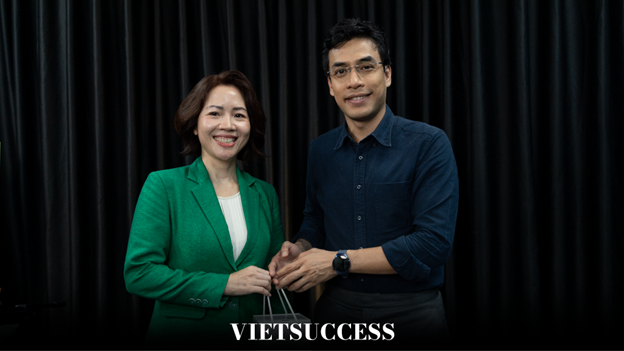
To hear Ms. Nguyễn Thị Quỳnh Phương’s full and insightful sharing, you can listen to the podcast: CLICK HERE
Source: Vietsuccess | Author: Yên Huỳnh
HR reports
Download presentations, useful documents and more in our library
Get them nowRelated insights

Contact us

Solve your HR problems!
Leave your inquiries here. We'll contact you within 24 hours.
Vietnam Head Office
6th Floor, Star Building, 33 Mac Dinh Chi, Saigon Ward, Ho Chi Minh city, Vietnam